
Fuel level sensor for fleets: probes vs gauges explained
By Zakaria Gaizi, Founder of Tracky Solutions
10 min · published on
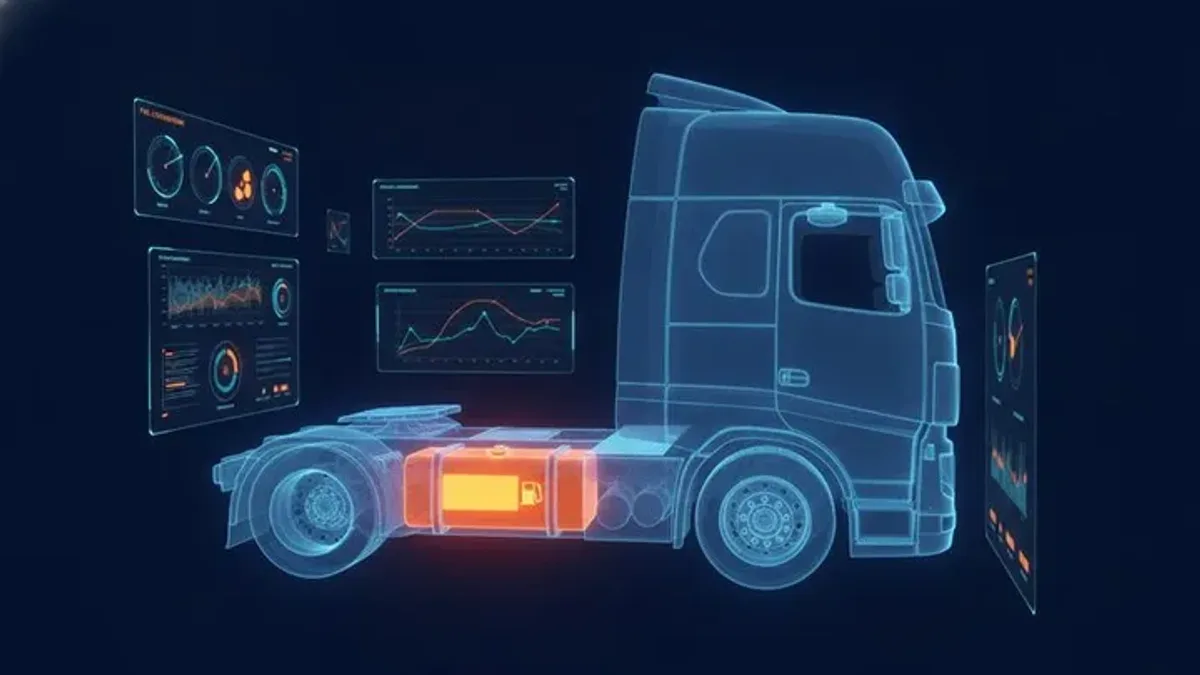
Capacitive probe, stock gauge or CAN bus: how a fuel level sensor measures your tanks to the liter, catches fuel siphoning and checks every fill-up.
GPS tracking tells you where a vehicle goes. A fuel level sensor tells you what it really burns, and more to the point, what leaves the tank without ever reaching the engine. In a Moroccan fleet where diesel makes up 30 to 40% of operating costs, the sensor is what turns a suspicion of fuel theft into time-stamped proof, and a pile of fuel receipts into numbers you can check.
First, a word on vocabulary, because the market mixes everything up. The fuel gauge is the vehicle's factory indicator, the one on the dashboard. The fuel probe (or fuel level sensor) is a dedicated measuring instrument installed in the tank and wired to the GPS tracker. Both measure the same thing, with very different accuracy. This article explains when the gauge is enough, when you need a probe, and how the whole setup is installed and calibrated in the field.
Why the dashboard fuel gauge isn't enough
A vehicle's stock gauge is built for one job: telling the driver when to stop for fuel. Its accuracy is around 10 to 15% of the tank, it reacts with a lag, and it deliberately smooths out changes so the needle doesn't swing on every bend. On a 400-liter truck tank, a 10% margin means 40 liters that nobody measures. That is exactly the volume of an overnight siphoning job.
Pulling this gauge signal through the GPS tracker (from the CAN bus or the factory float) still has its uses. It costs little or nothing, and it's enough to follow a consumption trend on light vehicles. But if you want to catch someone taking 15 liters, check that an 80-liter fill-up on the invoice really put 80 liters in the tank, or compare two drivers on the same route, you need a dedicated measurement. You need a probe.
Fuel sensor technologies, from simplest to most accurate
Start with the factory float gauge: a moving arm and a variable resistor. The tracker can read it, accuracy is low, and nothing extra needs installing. This is the "trend" option for cars and small vans.
Next comes CAN bus reading. On recent vehicles, the ECU broadcasts the tank level and the manufacturer's fuel consumption figure. A CAN-compatible tracker (typically Teltonika or Ruptela) reports them without touching the tank. Accuracy is medium and installation is quick, but you are still getting the manufacturer's data, smoothing included.
Last, the capacitive probe, which is the professional standard. It's a tube inserted vertically into the tank and cut to the tank's exact depth, and it measures the level through changes in electrical capacitance. Accuracy is around 1 to 2% after calibration, it responds within seconds, and there are no moving parts to wear out. This is what you'll find on truck, bus and heavy equipment fleets where fuel is managed seriously. For special cases (dual tanks, odd shapes), we fit two probes, or one probe per tank.
CAN bus plus fuel probe: the combination that completes the picture
The real question isn't "CAN or probe?" On a truck, the professional answer is both. Each source measures half of the problem. The CAN bus knows what the engine burns: liters injected, RPM, load, manufacturer mileage. The probe knows what the tank holds: the actual level, the volume of each fill-up, drops while parked. On its own, each one has a blind spot. Put them side by side and they tell the whole story of the diesel, from the pump to the exhaust.
Cross-checking settles the ambiguous cases. Say a vehicle shows excess consumption. If the CAN data confirms the engine really burned those liters, the issue is driving, routing or mechanics, and it's a conversation with the driver or the workshop. If the tank lost fuel the engine never burned, someone took it. That's a security issue, and you have the time and location. Without the cross-check, both cases look the same on an invoice, and you either blame the wrong person or see nothing at all.
The same logic applies to audits. The fill-up volume measured by the probe gets matched against the pump receipt, and real consumption per 100 km gets compared with the manufacturer figure from the CAN bus. A lasting gap between the two points to underinflated tires, a clogged filter or an odometer that no longer tells the truth. This is exactly the setup Tracky installs on truck fleets: a CAN-compatible tracker (typically a Teltonika FMC150 or a Ruptela FM-Pro4) plus a calibrated capacitive probe in each tank. The installation details, the full comparison and a downloadable presentation are on our fuel probe + CAN bus page.
What a fuel probe actually measures once installed
Once wired to the GPS tracker, the probe produces a continuous level curve, time-stamped and geolocated. Each event on that curve has a signature you learn to recognize. A fill-up is a fast rise, and you can read its volume directly and compare it with the pump receipt. Driving consumption is a gentle slope that tracks the kilometers covered. Siphoning is a sharp drop with the engine off. It looks like nothing else, and you get the time and place it happened.
The fuel management module in our platform processes this curve automatically: real consumption per 100 km by vehicle and by route, the volume of every fill-up, and a real-time alert on any abnormal drop while parked. The fleet manager doesn't read curves. He gets events: "210-liter fill-up in Ait Melloul at 2:32 pm", "35-liter drop with engine off, depot parking lot, 2:14 am".
That level of detail changes the conversations. The manager of a refrigerated fleet in Fez recovered 40,000 MAD in six months after installing probes. The fuel theft stopped as soon as the team knew the tanks were being measured. The other ways to save are covered in our fuel guide.
Installation and calibration: where accuracy is won or lost
A capacitive probe is installed in one visit per vehicle: drilling the top of the tank, cutting the probe to the tank's depth, sealing, and wiring it to the tracker. Our technicians do it at your site, with the tank full or empty depending on the procedure.
Calibration is the step rushed installers skimp on, and it's the step that determines accuracy. Every tank has its own geometry. One centimeter of level doesn't hold the same volume at the top and at the bottom of a cylindrical tank. So we calibrate by pouring in known volumes in stages and recording the level-to-liters table for that specific tank. A well-calibrated sensor measures to the liter. The same sensor without proper calibration is off by 5 to 10%.
One thing to watch if you're comparing quotes: ask how calibration is done, in how many stages, and whether it's redone when a tank is replaced. The answer tells you everything about how serious the installer is.
Which fuel sensor for which vehicle?
Here is the field rule we apply at Tracky, vehicle by vehicle, during the fleet audit:
| Vehicle | Recommended sensor | What you get |
|---|---|---|
| Car, small van | Stock gauge or CAN reading | Consumption trend, detection of large gaps |
| Recent light commercial vehicle, panel van | CAN reading, probe optional | Manufacturer consumption, smoothed level |
| Truck, coach, dump truck | Capacitive probe + CAN reading | The complete setup: accurate to the liter, driving vs. siphoning settled |
| Heavy truck with dual tanks | Two capacitive probes + CAN | Level of each tank, transfers visible |
| Construction equipment, generator | Heavy-duty capacitive probe | On-site diesel tracking, theft alerts |
How much a fuel level sensor costs, and how fast it pays back
The capacitive probe is a sensor added on top of the GPS tracker. Expect a one-time charge for the hardware and installation, then nothing extra on the subscription with a serious provider. Insist that the quote lists the probe, installation and calibration line by line, rather than a vague "fuel included" that often hides a simple mileage-based estimate.
The payback math is quick. A truck burning 3,000 to 5,000 MAD of diesel a month that loses even 5% to detours, idling and theft pays for its probe within a few months. On fleets equipped by Tracky, fuel spending can drop by up to 18% in the first year, with probes and platform working together. Plug your own numbers into the savings calculator to get a ballpark figure for your fleet.
Questions to ask before you equip your tanks
Four questions separate a serious offer from a disappointment. Is the measurement real or estimated? Plenty of products advertise "fuel management" that is only a theoretical calculation based on mileage, with zero chance of spotting siphoning. Is calibration done in stages, on your own tank? Are alerts sent in real time, with time and location? And is the history kept and exportable, so you can check declared fill-ups against measured volumes?
At Tracky, the probe, installation, calibration and platform come as one package, with technicians in more than 40 cities. And as with everything else, you can check it before you sign. We equip one of your vehicles for a 15-day trial, you compare the level curve with your pump receipts, and you decide based on your own numbers. Request a demo and we'll get back to you within 24 business hours.
Frequently asked questions
What is the difference between a fuel gauge and a fuel probe?
The gauge is the vehicle's factory indicator, designed for the driver: 10 to 15% accuracy, slow response, smoothed values. A fuel probe is a dedicated measuring sensor installed in the tank and wired to the GPS tracker: 1 to 2% accuracy after calibration and a response within seconds. The gauge is fine for following a trend on a light vehicle. You need a probe as soon as you want to detect siphoning, verify fill-ups or measure a truck's real fuel consumption.
How does a capacitive fuel level sensor work?
It's a tube inserted vertically into the tank and cut to the tank's exact depth. As fuel rises or falls inside the tube, its electrical capacitance changes. That value is measured continuously and converted into liters using a calibration table built for that specific tank. With no moving parts, it doesn't wear out, and after staged calibration its accuracy reaches 1 to 2% of the volume.
Can a fuel sensor really detect fuel siphoning?
Yes. In fact that's its main job in a fleet. A fast drop in level with the engine off has a signature that nothing else produces: not driving consumption, not evaporation, not temperature changes. The alert goes out in real time with the time, the volume taken and the vehicle's GPS position. In practice, the theft often stops as soon as the team knows the tanks are being measured.
Do I have to choose between CAN bus data and a fuel probe?
No. On a truck, the complete setup combines both. The CAN bus measures what the engine burns (liters injected, RPM, manufacturer mileage), and the probe measures what the tank holds (actual level, fill-ups, drops while parked). Cross-checking the two settles the ambiguous cases: excess consumption confirmed by the CAN data is a driving or mechanical issue, while a tank that loses fuel the engine never burned means someone took it. This is the standard setup for heavy truck fleets: a CAN-compatible tracker plus a calibrated capacitive probe.
Can a fuel probe be installed on any vehicle?
On the vast majority, yes: trucks, coaches, vans, construction equipment, and even generators or fixed storage tanks. The probe is cut to the depth of the tank, and dual tanks get two probes. For cars and small vans, where a probe is rarely worth it, reading the stock gauge or the CAN bus gives a good enough consumption trend.
Does installing a fuel sensor void the vehicle warranty?
No, as long as a professional installer does the work properly. The tank is drilled at the top with a sealing kit made for the purpose, and nothing touches the engine's fuel supply circuit or the vehicle's electronics. On leased or long-term rental vehicles, the installation is reversible. Just let the leasing company know if your contract requires it.