
Fuel management
Missing fuel, caught. Measure actual fuel use, spot refills and siphoning, and cut out costly detours.
- Detects abnormal drops in fuel level
- Refills and fuel use tracked per vehicle
- Real-time siphoning alerts
- Up to 18% less fuel in the first year
What is fleet fuel management?
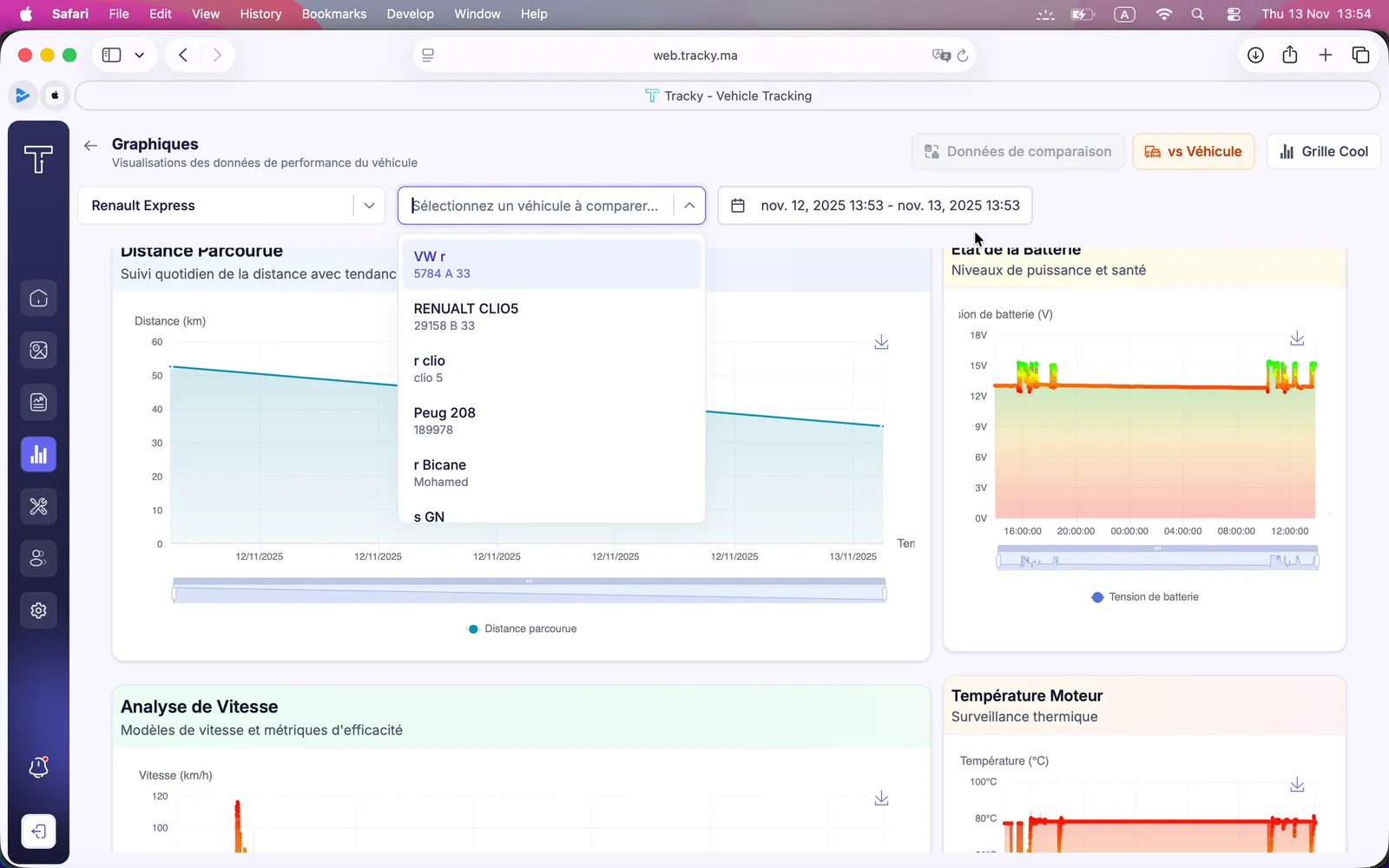
Fuel management means measuring what each vehicle actually consumes, checking refuels and spotting losses: siphoning, fake refuels, detours and engines left idling. Diesel makes up 30 to 40% of a fleet’s operating costs, and it is often the least controlled line, because a monthly invoice does not say where the liters went. With Tracky, fuel data travels from the vehicle to the platform, through the CAN bus or a sensor in the tank, and is matched against the trips. Abnormal level drops trigger a real-time alert, and every vehicle gets its consumption per kilometer, comparable from one driver to the next. Equipped fleets cut their fuel use by up to 18% in the first year.
Where do the fuel savings come from?
From several places at once, rarely from just one. Theft often stops as soon as the team knows the tanks are measured. Detours and private trips show up in the history. Idling, which can add 5 to 10% to fuel use in town, becomes a number per vehicle. Driving matters too: according to the U.S. Department of Energy, aggressive driving raises fuel consumption by 10 to 40% in stop-and-go traffic.
Public studies point the same way: Verizon Connect measured average fuel savings of 16% among fleets using GPS tracking. Our guide to reducing fleet fuel consumption goes through the seven levers, in the order to tackle them.
Do you need a sensor in the tank?
Not always. On cars and small vans, reading the CAN bus or the original gauge gives a good enough consumption trend. On trucks, a fuel level sensor becomes the only way to detect siphoning with the engine off and to check the real volume of each refuel. The full setup, with the sensor and the CAN bus cross-checked, is described on the fuel sensor + CAN bus page.
Questions about Fuel management
How do you detect fuel siphoning?
Siphoning shows up as a fast drop in the fuel level while the engine is off: neither driving nor evaporation produces that pattern. A sensor in the tank picks it up, and the alert goes out in real time with the time, the volume taken and the vehicle’s GPS position.
How much fuel can GPS tracking save?
Up to 18% in the first year for fleets equipped by Tracky. The result depends on the starting point: a fleet with theft or a lot of idling gains more than one that is already closely monitored. The savings calculator on this site gives an estimate from your own numbers.
Can you compare the fuel use of two drivers?
Yes. Consumption is calculated per vehicle and related to mileage, so two drivers on the same route can be compared. A lasting gap opens a conversation based on numbers about driving, idling or routing, rather than an accusation.
Ready to run your fleet differently?
See fuel management on your own vehicles. Demo and quote within 24 hours.